
Japanese Brand Marketing: A Strategic Approach for Global Success
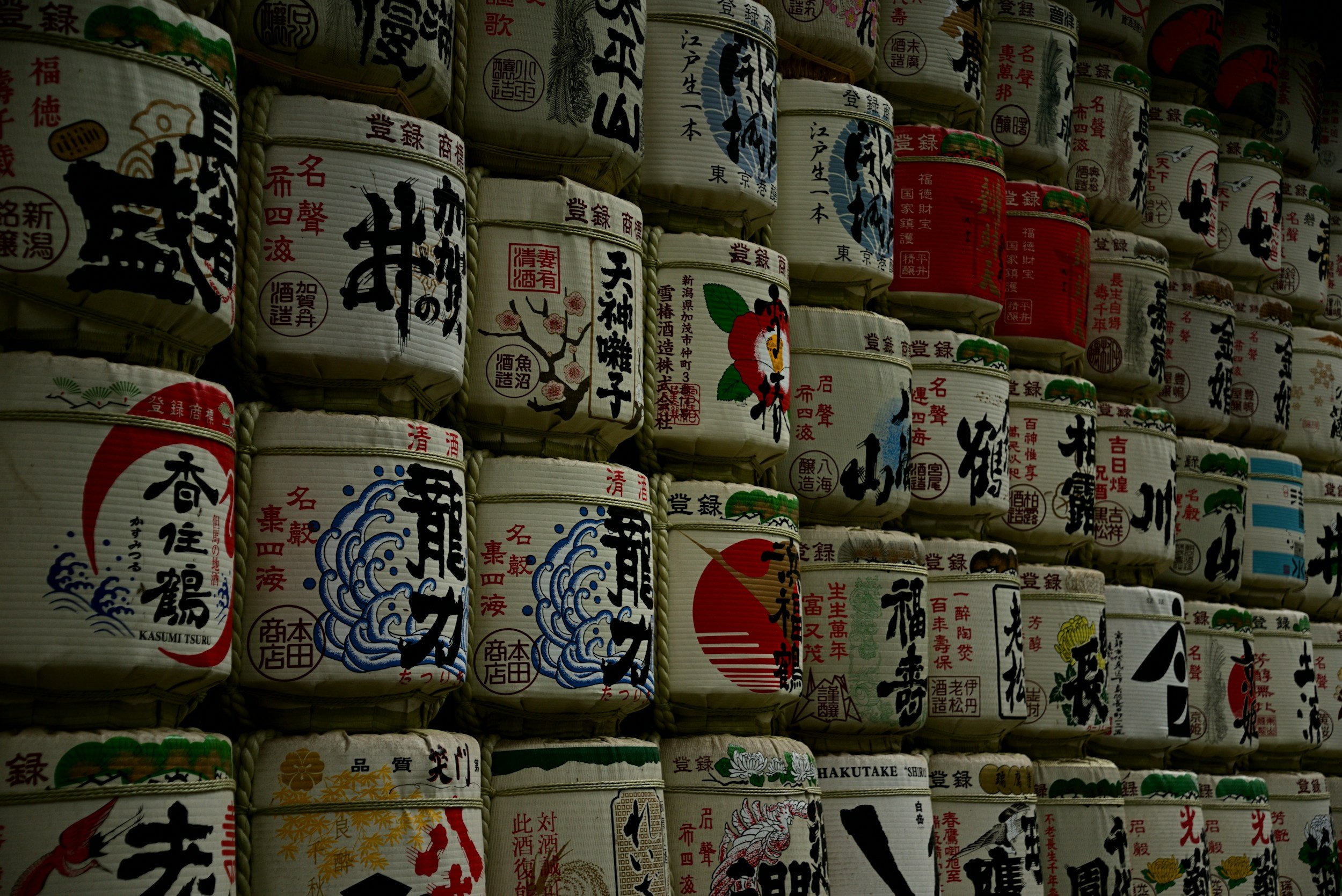
1. Introduction: Lessons from Sake's Global Brand Strategy
The reality we observed in the first part was harsh. Whilst Kobe beef, with its 300-year tradition, remains limited to annual exports of 77.8 tonnes, Australian Wagyu exports 30,000-40,000 tonnes and has built a market worth 20 billion Australian dollars (approximately 13.3 billion USD). Australia's strategic investment in introducing 220 head of Wagyu cattle from Japan in the 1990s led to overwhelming market dominance 30 years later.
However, there exists a Japanese brand that has followed an entirely different trajectory during the same period. That brand is sake.
Beginning with registration under the GI (Geographical Indication) protection system in 2015, and through the implementation of international protection via the Japan-EU Economic Partnership Agreement in 2019, sake exports have achieved dramatic growth. Exceeding 40 billion yen (approximately 2.7 billion USD) for three consecutive years, the market has doubled in size in merely five years. In stark contrast to Kobe beef, sake has established its position in the global market as a "Japanese brand".
Why has there been such a marked difference in fortunes between these Japanese brands?
The answer lies in their divergent strategies. Whilst Kobe beef has remained confined to traditional quality appeal and fragmented marketing, the sake industry has implemented a unified brand protection strategy and proactive market education. Just as the Australian Wagyu Association has challenged the global market with a unified marketing budget of 5 billion yen annually (approximately 330 million USD), the Japan Sake and Shochu Makers Association has adopted an industry-wide strategic approach with collective determination.
This success model becomes the most powerful weapon for foreign companies when collaborating with Japanese brands. Numerous sectors exist that possess excellent Japanese technology and quality yet struggle with marketing strategy. By combining foreign companies' global networks and strategic marketing capabilities with these strengths, one can replicate the success seen with sake.
In this article, we shall introduce a practical framework for foreign companies to build sustainable competitive advantage through collaboration with Japanese brands, applying the sake success model to other industries. This is not mere theory, but content that can be utilised in your business as a step-by-step strategy that enables actual implementation.
2. Market Redefinition Strategy: Transforming "bonsai" into "BONSAI"
2.1 Competitive Redefinition: Opportunities Emerge When Perspectives Broaden
Analysing the success factors of sake, the most critical turning point was "competitive redefinition". Traditional sake marketing was trapped in a narrow competitive view of "sake versus alcoholic beverages from other countries". However, the successful strategy redefined competition on a consumption occasion-based approach, focusing on consumers' "relaxation time", "social occasions", and "cultural experiences".
Through this shift in thinking, sake evolved from a mere alcoholic beverage into a "lifestyle product for experiencing Japanese culture". Competitors came to include not only wine and beer, but also fine dining experiences, cultural events, and even meditation apps.
This "competitive redefinition" thinking is extremely important when foreign companies collaborate with Japanese brands as well. Consider, for example, the 300-yen snack market. Conventional thinking tends towards comparisons of "apples versus bananas versus wagashi". However, consumers' actual choices involve decision-making across a far broader range: "fruit versus snack confectionery versus coffee versus small luxury items".
2.2 The Success Formula for Cultural Translation: The Moment "bonsai" Became "BONSAI"
One of the most successful cases of overseas expansion of Japanese culture is the transformation of "bonsai" into "BONSAI". This change is not merely a shift in English notation. It represents a fundamental transformation in marketing strategy.
Before: Bonsai as Japanese spiritual cultivation
- An art requiring decades to master
- Presupposing deep understanding of Japanese culture
- A hobby for a limited circle of enthusiasts
- Entry barriers: Extremely high
After: BONSAI for urban lifestyles
- A gardening solution for limited spaces
- Aesthetic value as interior decor
- A tool for stress reduction and mindfulness
- Entry barriers: Significantly reduced
Through this transformation, BONSAI has become an attractive option for hundreds of millions of people living in urban areas worldwide. Whether in a studio apartment in New York, an office in London, or a condominium in Singapore, it has been redefined as a product that can provide "connection with nature".
What is crucial is that throughout this transformation process, the essential values of bonsai (aesthetic sensibility, respect for nature, growth through continuous care) have not been lost. Rather, by adding new value within a global context, it has succeeded in conveying its appeal to a far greater number of people.
2.3 Essence Extraction Framework: Succeeding in Cultural Translation Through Three Steps
For foreign companies to succeed in collaboration with Japanese brands, the utilisation of a systematic "essence extraction framework" is indispensable.
Step 1: Core Value Identification
Clarify "what is truly unique and difficult to imitate". In the case of Kobe beef, the core values are the long-term rearing management of 28-60 months based on 1,200 years of pure bloodlines, and rigorous quality control through the BMS (Beef Marbling Standard). However, merely emphasising "1,200 years of tradition" does not resonate with contemporary consumers.
Step 2: Local Context Redefinition
Reconstruct the identified core values from the perspective of "how does this provide value to local life?" In the BONSAI example, the value of "spiritual cultivation" was redefined as "urban stress reduction". Kobe beef's long-term rearing management could be redefined as "contribution to sustainable and healthy eating".
Step 3: Global Language Adaptation
Ultimately, refine this into "expressions that resonate globally". Specialist Japanese terminology (marbling, omotenashi, takumi craftsmanship) is re-expressed as universal values (quality assurance, customer experience, expert craftsmanship).
Through this framework, one can maintain the essence of excellent Japanese products and services whilst acquiring competitiveness in the global market. When combined with the marketing capabilities of foreign companies, market expansion similar to that achieved by sake becomes possible.

3. Integrated Brand Protection Strategy: Application of the Sake Model
3.1 Three Pillars of Sake's Success: Why the Market Could Be Doubled in Five Years
The remarkable growth of sake is not coincidental. It is the result of three meticulously designed strategic pillars functioning in mutual interaction.
First Pillar: Strategic Implementation of Legal Protection
The registration under the GI (Geographical Indication) system in 2015 was not a mere legal procedure. This was a strategic investment to protect the designation "SAKE" internationally and to clearly differentiate it from counterfeit products. Furthermore, through the Japan-EU Economic Partnership Agreement of 2019, legal protection in the European market was strengthened. As a result, brand value as "authentic Japanese sake" improved dramatically.
Second Pillar: Industry-unified Marketing Power
Unified campaigns by the Japan Sake and Shochu Makers Association demonstrated their effectiveness. Rather than individual breweries conducting sporadic marketing, a consistent message was conveyed to the world under the unified brand of "SAKE". This is the same approach as the Australian Wagyu Association's annual unified budget strategy of 5 billion yen (approximately 330 million USD) that we observed in the first part.
Third Pillar: Systematic Market Education
Most important was the consistent market education directed at consumers. By systematically conveying how to drink sake, food pairings, and cultural context, it was positioned as a "Japanese cultural experience product" that transcends being merely an alcoholic beverage.
As a result of these three pillars functioning simultaneously, sake succeeded in doubling its export market of over 40 billion yen (over 2.7 billion USD) in five years.
3.2 Application Strategy to Other Industries: Four Essential Steps to Replicate Success
The sake success model is applicable to other Japanese brands as well. We shall present the essential steps for foreign companies to utilise this model when collaborating with Japanese brands.
Step 1: International Trademark Registration at Early Success Stage
From the moment one senses the promise of market success, commence trademark registration in key export markets. In the case of sake, international protection of the designation "SAKE" was established through GI system registration. Foreign companies, in cooperation with their Japanese partners, undertake strategic rights acquisition of product names, technology names, production method names, and similar designations.
Step 2: Unified Marketing by Industry Associations
To transcend the limitations of individual companies, promote unified strategies across the entire industry. Foreign companies can become driving forces for unified marketing through industry association establishment support or participation in existing associations. They function as an "external catalyst" to integrate the fragmented marketing of Japanese companies.
Step 3: Proactive Counterfeit Prevention Measures
At the stage when success becomes visible, counterfeit or similar products will inevitably emerge. Sake established legal protection through the GI system, clearly distinguishing "authentic products" from counterfeits. Foreign companies can protect the intellectual property of their Japanese partners through legal framework development support and provision of international rights enforcement know-how.
Step 4: Continuous Market Monitoring and Rights Enforcement
Rights acquisition is merely the beginning. A system is required for continuous market surveillance to detect infringements early and implement appropriate rights enforcement. The global networks of foreign companies become a powerful weapon in this monitoring framework.
3.3 Strategic Entry Timing for Foreign Companies: Transforming Challenges into Opportunities
Opportunity Window Identification
Currently, numerous Japanese companies possess excellent products yet struggle with marketing strategy. Situations such as that of Kobe beef observed in the first part represent ideal entry opportunities for foreign companies. It is crucial to identify "transformation periods" in other industries similar to the 2015-2020 period when sake achieved success through unified strategy.
Entry Method Optimisation
The formula for success is "Japanese quality + foreign company marketing capabilities = market expansion". Japanese partners provide strengths in technology, quality, and tradition, whilst foreign companies provide brand strategy, market development, and marketing execution capabilities. Through this role allocation, both parties can establish a mutually beneficial relationship.
Importance of Risk Management
Detailed rights verification is indispensable prior to entry. One must ascertain the status of existing trademarks, patents, GI registrations, and similar matters to avoid future infringement risks. Furthermore, in contracts with Japanese partners, clearly defining intellectual property handling, revenue sharing, roles during market expansion, and similar matters becomes the prerequisite for success.
Through application of the sake model, foreign companies can establish sustainable competitive advantage in collaboration with Japanese brands.
4. Practical Marketing in the Digital Era
4.1 Storytelling Strategy: Three Methods to Achieve Quality Visualisation
In the digital era, effectively visualising quality, the greatest weapon of Japanese brands, becomes the key to success. The conventional unilateral approach of "please buy because the quality is good" does not resonate with contemporary consumers facing information overload.
Method 1: Complete Traceability through QR Code Integration
The "QR in QR code" technology developed by DENSO is a revolutionary tool for Japanese brand marketing. By embedding multiple pieces of information in a single QR code, one can achieve complete transparency of production location details, work logs, chemical usage records, farm field photographs, and even producer photographs.
In Japanese vegetable exports to Singapore, a proof-of-concept trial has succeeded in enabling consumers to verify cultivation process videos and detailed cultivation information by scanning QR codes. Through this transparency, a transition from price competition to value competition has been realised.
Method 2: Premium Experience Creation through Video Documentation of Takumi Craftsmanship
This is a strategy to convert the manufacturing process itself into purchase motivation. The long-term rearing management of 28-60 months for Kobe beef, the delicate temperature control by the toji (master brewer) in sake production, and the manual work by craftsmen in traditional crafts represent competitive advantages that are difficult for other countries to imitate as sincere manufacturing processes.
What is crucial is not merely factory tour videos, but explaining "why that process is necessary" and "what value it creates" from a consumer perspective. By visualising the skills and passion of craftsmen, one can demonstrate price justification.
Method 3: Utilisation of Authoritative Third-party Certification Systems
Japan's GI (Geographical Indication) system, BMS (Beef Marbling Standard), and various certification marks possess high international credibility. By utilising these certification processes themselves as marketing materials and conveying to consumers "why certification could be obtained" and "the rigour of certification standards", one enhances brand value.
Foreign companies can assume the role of translating this certification information in an accessible manner within the local cultural context and conducting consumer education.
4.2 SNS Strategy: Clear Criteria That Separate Success from Failure
The social media marketing market has reached 1,203.8 billion yen (approximately 80.3 billion USD) (113% year-on-year), whilst influencer marketing has reached 86 billion yen (approximately 5.7 billion USD) (116% year-on-year). However, indiscriminate investment cannot be expected to yield results.
Recommended Strategy: Value Creation in Local Context
Strategic Collaboration with Local Influencers
In the case of ANA (All Nippon Airways) collaborating with Kobe beef YouTubers, rather than mere product introductions, fusion content with local culture such as "local cuisine made with Kobe beef" and "unexpected ways to enjoy Kobe beef" garnered substantial response.
COHINA acquired 120,000 followers through 400 days of continuous live streaming and achieved monthly sales of 100 million yen (approximately 6.7 million USD per month). CLANE increased e-commerce sales approximately threefold in one year through YouTube communication. The common denominator is "usage suggestions that blend into local life".
Cultural Bridge Content Creation
Thirty-six per cent of marketers consider unexpected brand collaborations important, and 75% of related SNS posts demonstrate positive reactions. Content with "unexpectedness" that combines traditional Japanese products with local trends proves effective.
Non-recommended Strategy: Three Pitfalls to Avoid
Literal Translation of Japanese Cultural Concepts
Direct translation of uniquely Japanese concepts such as "omotenashi", "wabi-sabi", and "shokunin spirit" that ignores local cultural context leads to brand message dilution.
Ignoring Platform Characteristics
Each SNS platform possesses unique algorithms and user behaviour patterns. Distributing uniform content without understanding characteristics such as Instagram's visual-focused approach, TikTok's short-form videos, and LinkedIn's professional-oriented nature reduces effectiveness by half.
Neglecting Visual Storytelling
In an era when real-time communication utilising AI is crucial, text-centric information sharing cannot capture consumer attention. Neglecting visual impact is fatal.
4.3 Practical Points for D2C Implementation: Reducing Intermediary Margins and Building Customer Relationships
The D2C (Direct-to-Consumer) market is predicted to reach 2,770 billion yen (approximately 185 billion USD) in 2023 and 3 trillion yen (approximately 200 billion USD) by 2025. We shall present practical points for foreign companies to utilise the D2C model when collaborating with Japanese brands.
Enhancing Price Competitiveness through Eliminating Intermediary Margins
FABRIC TOKYO succeeded in reducing conventional retail margins through funding of approximately 1.35 billion yen (approximately 90 million USD) and providing high-quality products at fair pricing. By leveraging the high quality of Japanese brands whilst optimising distribution costs, one can realise price competitiveness comparable to Australian Wagyu.
Continuous Value Delivery through Direct Customer Relationships
BASE FOOD has realised improvements from product development to advertising based on customer voices through "customer-centric operational marketing that values connections with customers". FUJIMI grew to monthly sales of 200 million yen (approximately 13.3 million USD per month) scale before being acquired by POLA ORBIS Holdings for 3.8 billion yen (approximately 253 million USD).
What is crucial is maximising Customer Lifetime Value through continuous relationship building rather than one-off product sales. The high quality of Japanese brands becomes a powerful weapon for repeat purchase rate improvement.
Product Improvement through Real-time Feedback
Brands that provide personalised products based on diagnostic results have succeeded, realising product provision suited to consumer lifestyles rather than conventional mass production. By combining foreign companies' digital marketing capabilities with Japanese companies' manufacturing technology, flexible product development according to customer needs becomes possible.
Through D2C model success, Japanese brands can evolve from the conventional image of "high quality but high price" to a position of "high quality with fair pricing".
5. Practical Implementation Guide: Action Plan for Foreign Companies
5.1 Phased Entry Strategy: Maximising Results Whilst Minimising Risks
Clear phase setting is indispensable for successful collaboration. The success of sake was not realised overnight either, but was the result of step-by-step strategy execution.
Phase 1 (6 months): Market Testing Period
Small-scale Deployment with Existing Products
Initially, avoid large investments and commence with small-scale test deployment utilising existing Japanese products. Referring to the track record of 65.9% to 73.8% of Japanese companies in the United States and Canada achieving profitability, first establish a reliable revenue foundation.
Customer Feedback Collection System Establishment
Utilising the D2C (Direct-to-Consumer) model, establish mechanisms to collect direct customer voices. Learning from the success examples of BASE FOOD and FUJIMI, create a framework to reflect customer reactions in product improvements in real time.
Distribution System Establishment
Proceed in parallel with the establishment of international logistics systems and revenue generation from existing products. Particularly in the Southeast Asian market, which continues GDP growth of approximately 4.5%, efficient logistics network development becomes the key to profitability improvement.
Phase 2 (1-2 years): Full-scale Deployment Period
Localised Product Development
Based on feedback collected in Phase 1, undertake product development adapted to the local market. Like the transformation example from "bonsai" to "BONSAI", realise product deployment suited to local needs whilst maintaining core values.
Brand Awareness Expansion Strategy
Referring to the unified campaign strategy of the Japan Sake and Shochu Makers Association, engage in awareness enhancement at the industry level. Through unified marketing that transcends the limitations of individual companies, aim to enhance the value of the "Japan Brand" as a whole.
Competitive Differentiation Establishment
Leveraging lessons learnt from competition with Australian Wagyu, establish comprehensive differentiation not only in technological advantages but also in brand story, cultural value, and customer experience.
5.2 Practical Points for Collaboration with Japanese Companies: Overcoming Cultural Barriers
Three Criteria for Partner Selection
Balanced Evaluation of Technical Capabilities and International Expansion Willingness
Identify Japanese companies that possess excellent technology yet face challenges in overseas expansion. Fields such as Kobe beef that are "high quality but struggling with marketing" represent optimal targets.
Verification of Intellectual Property Protection Understanding
The final rules on outbound investment regulations announced by the United States in October 2024 have strengthened investment restrictions on critical technologies. Verify in advance whether Japanese partners understand the importance of intellectual property protection and can undertake appropriate legal responses.
Willingness for Long-term Relationship Building
Japanese business practices emphasise long-term trust relationships. Selecting partners who possess the willingness to build relationships with a 10- or 20-year perspective rather than pursuing short-term profits becomes the prerequisite for success.
Three Keys to Successful Collaboration
Understanding Japanese Business Practices
Understanding the characteristics of Japanese companies that devote time to the consensus-building process, involve appropriate stakeholders at each stage of decision-making. By respecting uniquely Japanese processes such as "nemawashi" (behind-the-scenes consensus building) and "ringi" (decision-making process), one can establish smooth collaborative relationships.
Securing Cultural Bridge Personnel
Accurate and culturally appropriate bridging by bilingual liaison staff, from technical documentation and contracts to daily exchanges, is indispensable. Securing personnel capable of business culture translation rather than mere language translation determines success.
Win-Win Value Distribution Design
Expecting Japanese partners to provide strengths in technology, quality, and tradition, and foreign companies to provide brand strategy, market development, and marketing execution capabilities, design clear role allocation and revenue sharing.
5.3 Success Measurement Framework: Data-driven Improvement Cycle
Quantitative Evaluation through KPI Setting
Regular Brand Awareness Measurement
Measure brand awareness in target markets every three months and quantitatively evaluate the effectiveness of marketing investment. Referring to the success metrics by which sake doubled its market in five years, confirm steady growth.
Market Share Growth Rate Monitoring
Continuously monitor relative position changes against competitors. Leveraging lessons from Australian Wagyu acquiring overwhelming market share over 30 years, aim for long-term market position improvement.
Customer Lifetime Value Enhancement Tracking
Through direct customer relationships utilising the D2C model, continuously improve repeat purchase rate, average order value improvement, recommendation rate, and similar metrics. Referring to success indicators of FABRIC TOKYO and BASE FOOD, establish sustainable customer relationships.
Strategy Optimisation through Continuous Improvement
Monthly Market Feedback Analysis
Analyse voice of customer, sales data, and social media reactions monthly to identify improvement opportunities in products, services, and marketing strategy.
Quarterly Competitive Landscape Review
Review market environment changes, new entrants, and existing competitors' strategy changes quarterly to maintain strategic advantages.
Flexible Strategy Adjustment Execution
Rather than adhering to fixed plans, establish a flexible strategy adjustment framework to modify strategy in response to market changes. The success of sake was also the result of adapting to market environment changes, and continuous learning and improvement become the key to success.