
Japan's Cold Chain Ecosystem: How Invisible Technology Preserves Food Freshness and Reduces Waste
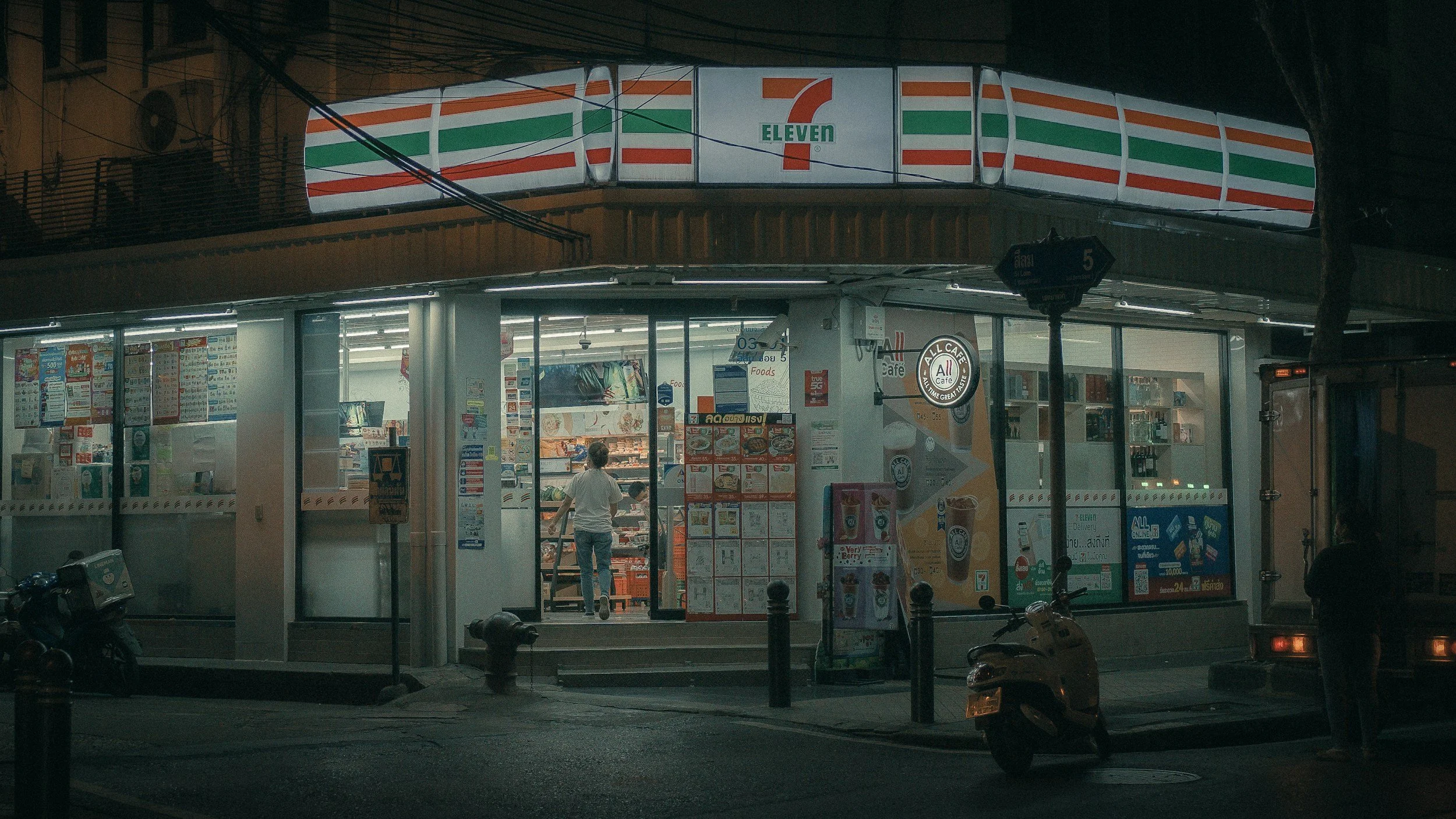
A rice ball sitting on the shelf of a Tokyo convenience store remains fresh 36 hours after manufacture. In New York, a similar product spoils within 12 hours. Sashimi in a department store basement retains its lustrous sheen until evening; convenience store bento boxes remain safe to eat late into the night. What accounts for this difference? It is not merely refrigeration technology. Japan possesses an "invisible technology ecosystem" worth trillions of yen, of which most Western retailers remain unaware.
The food waste rate in Japan's convenience store industry stands at approximately 2 per cent. This is astonishingly low compared to the 8-12 per cent typical of Western supermarkets. Each store discards 10-15 kilogrammes of food daily, a figure minimised through rigorous inventory management and forecasting technology. Approximately 200,000-300,000 tonnes of food loss are generated annually from the nation's roughly 57,000 convenience stores, yet this represents merely 5 per cent of Japan's total food loss. Behind these figures operates the world's most sophisticated cold chain ecosystem, in which packaging technology, logistics systems, and store operations are integrated with precision.
This is not simply a story of superior logistics. It is a story of a business model to which most overseas retailers lack access. Japan's cold chain market was estimated at approximately 20.5 billion US dollars in 2024, with projections reaching 26.7 billion US dollars by 2029. Yet the true value does not appear in market size figures. The ecosystem itself—a complex combination of freshness-preserving films, anti-condensation packaging, and hourly inventory management systems—is what overseas companies ought to notice.
Why Japan's Cold Chain Is Special: The Fusion of Culture and Technology
To understand why Japan's cold chain has reached world-class standards requires knowledge of its cultural background. This is not merely the result of technological innovation, but the inevitable product of values deeply rooted in Japanese society and severe geographical and climatic constraints.
Social Context: Why the Japanese Are Obsessed with Freshness
The tradition of "Hatsumono Shinkō" (belief in the first harvest), continuing from the Edo period, is a uniquely Japanese cultural tradition that places special value on freshly harvested ingredients. First bonito, first aubergine, first matsutake mushroom—eating the season's first harvest has been regarded not as mere preference, but as a ritual act embodying respect for nature and wishes for health. This cultural DNA persists in modern times, forming the background to Japanese consumers' extraordinary degree of interest in "manufacture dates" and "best-before dates".
Japan is one of the world's rare nations that strictly distinguishes between the "best-before date" (shōmikigen) and the "use-by date" (shōhikigen). The best-before date indicates "the period during which food can be eaten deliciously"; the use-by date indicates "the period during which food can be eaten safely". This dual standard symbolises the rigour of Japanese society's food quality management. According to consumer surveys, approximately 65 per cent of Japanese consumers use "within 24 hours of manufacture" as a purchasing criterion, whilst in the West this remains at approximately 30 per cent. For sashimi, within six hours of manufacture; for rice balls, within 24 hours—the threshold of freshness deterioration that Japanese consumers tolerate is extremely narrow by global standards.
These exacting expectations established a new norm of "always, anywhere, fresh goods available" alongside the formation of convenience store culture from the 1970s onwards. Since Seven-Eleven arrived in Japan in 1974, the concepts of 24-hour operation and daily delivery goods (nippaihin) took root, and consumer expectations rose year by year. That a rice ball should be fresh when one stops at a convenience store at 3 a.m. is taken for granted. Retailers unable to meet this expectation lose customers immediately. A culture of complaints has promoted enhanced traceability, making "freshness maintenance" the top priority across all processes from manufacture to sale.
Infrastructure Reality: Density and Disaster Preparedness
Japan's land area is approximately 380,000 square kilometres, roughly equivalent to California. Yet more than 120 million people live there. This high population density demands special optimisation for cold chain logistics. The Western model of long-distance transport by large lorries does not suit Japan's narrow roads and short-distance delivery needs. Instead, high-frequency delivery by small refrigerated lorries has developed.
The Tokyo metropolitan area's population density is amongst the world's highest, providing an optimal environment for efficient "last mile" delivery. Distribution centres employ a multi-layered structure of regional hubs, urban micro-hubs, and stores. A staged delivery network—from the regions to large logistics bases near Tokyo, from there to small urban distribution centres, and finally to individual stores—enables delivery within two hours. This "short-distance, high-frequency" model is key to achieving both freshness maintenance and improved inventory turnover.
Furthermore, the natural disaster risks of earthquakes and typhoons have forced Japan's cold chain to possess unique redundancy (backup systems). The 1995 Great Hanshin-Awaji Earthquake, the 2011 Great East Japan Earthquake, and annually arriving typhoons exposed the vulnerability of logistics networks dependent on single routes. From those lessons emerged multiple delivery routes, refrigerated warehouses equipped with emergency power, and systems for inter-regional inventory sharing. The "resilience" to maintain food supply even during disasters is a hidden strength of Japan's cold chain.
The nation's compactness has yielded advantages in short-distance delivery optimisation. Supply chains averaging 2-3 hours from farm to distribution centre, and 1-2 hours from distribution centre to store, minimise freshness deterioration. By contrast, in the United States, it is not uncommon for farm-to-store transit to average 24-48 hours. This time differential creates the quality advantage of Japan's fresh food.
The Three-Layer Structure of Japan's Cold Chain Ecosystem
Japan's cold chain functions not as a single technology or corporate effort, but as a system in which three layers are organically integrated. The first layer is "packaging technology", the second layer "logistics and real-time management", and the third layer "retail infrastructure". Into each layer are embedded technological innovations by small and medium-sized enterprises unknown to the world.
First Layer: Packaging Technology—The Initial Line of Defence
The secret to a convenience store rice ball remaining fresh for 36 hours lies in its packaging. The core consists of technology called Modified Atmosphere Packaging (MAP). When packaging rice balls, instead of ordinary air (21 per cent oxygen, 78 per cent nitrogen), a mixed gas with precisely controlled ratios of carbon dioxide and nitrogen replaces it. By suppressing oxygen concentration below 5 per cent, the proliferation of aerobic bacteria is substantially delayed. This technology has been standardised in Japan's convenience store industry since the 1990s and is now widely applied to sashimi, sandwiches, and prepared foods.
Yet gas replacement alone is insufficient. When condensation occurs inside packaging, the product's "apparent freshness" is compromised. Japanese consumers do not purchase products with water droplets adhered to the package interior. This is where anti-fog film appears. This film has a hydrophilic coating applied to its surface, which spreads water vapour as a fine water film, preventing droplet formation. Products constantly maintain a state of "appearing beautiful through transparent packaging". This anti-fog technology is the crystallisation of micro-processing technology that mid-sized Japanese film manufacturers have developed since the 1980s.
Vegetables and fruit require a different approach. These continue to "breathe" after harvest, releasing ethylene gas. Ethylene is a hormone that promotes ripening; left unchecked, it rapidly causes quality deterioration. Ethylene-absorbing sheets control ethylene concentration inside packaging, suppressing the ripening speed of vegetables and fruit by 30-50 per cent. These sheets contain adsorbents such as activated carbon or potassium permanganate, chemically capturing ethylene. As a result, lettuce remains crisp for a week; tomatoes retain their red lustre for ten days.
The suppliers of these packaging technologies are mid-sized film manufacturers employing 50-200 people. They are not petrochemical giants but niche players specialised in particular functions. For instance, one company possesses patented technology for three-layer structure film and supplies OEM to major convenience store chains. Another company is a specialist manufacturer of freshness-preserving agents (oxygen absorbers and ethylene absorbers), deploying product lines from types embedded in packaging materials to independent packet types according to application. These small and medium-sized enterprises' competitive advantage lies in customisation capability. Flexibility in lot sizes, specification changes according to customer needs, and short lead times through domestic production—agility that large corporations cannot imitate supports Japan's cold chain.
Japan's functional packaging materials market is approximately 350 billion yen in scale, growing at an annual rate of 4.2 per cent. Exports to Asia are expanding at an annual rate of 12 per cent, with retail operators in China and ASEAN nations particularly advancing the introduction of Japanese-made packaging materials. Technological superiority is clear: freshness preservation periods average 40 per cent longer compared to Western products. This advantage is the fruit of materials science expertise that Japanese companies have accumulated over decades and continuous improvement through close collaboration with customers.
Another important element of packaging technology is the evolution of refrigerants and insulating materials. Conventional gel packs cannot maintain sub-zero temperatures for extended periods and are also heavy. Phase Change Materials (PCM) solve this problem. PCM undergoes phase transition between liquid and solid at a specific temperature, absorbing and releasing large amounts of latent heat in the process. By using temperature-band-optimised PCM (-20°C / 0°C / 5°C / 15°C) according to need, transport at all temperature bands becomes possible, from frozen foods to fresh vegetables.
A PCM manufacturer specialising in seafood logistics has developed -60°C-compatible PCM for ultra-low temperature transport of tuna. A vacuum insulated box manufacturer for pharmaceutical cold chains supplies products capable of maintaining temperature for 72 hours for vaccine transport. A lightweight refrigerant manufacturer for air cargo has established technology that reduces weight by 40 per cent compared to conventional products whilst extending refrigeration time by 50 per cent. These technologies are evolving from "disposable" to "reusable", achieving both sustainability and economic efficiency.
Second Layer: Logistics and Real-Time Management—Data Protects Freshness
Japan's refrigerated lorries are not mere "mobile refrigerators". Multi-temperature-zone vehicles capable of simultaneously managing three temperature zones—frozen (-20°C), refrigerated (5°C), and ambient—have become standard. This technology enables efficient transport of frozen foods, chilled goods, and ambient products in a single delivery. Whilst in the West separate lorries for each temperature zone are often operated, Japan's advanced insulation technology and refrigeration control make it possible to physically partition the vehicle interior whilst maintaining different temperatures.
This multi-temperature-zone technology improves delivery efficiency by 20 per cent and reduces fuel costs by 15 per cent. Furthermore, adoption of high-performance insulation materials and high-efficiency refrigeration units reduces energy consumption by 30 per cent compared to conventional models. Refrigerants are also advancing environmental compatibility, with accelerating conversion from HFC (hydrofluorocarbon) to natural refrigerants (CO2, ammonia). As of 2025, approximately 5,000 electric and hydrogen fuel cell refrigerated vehicles operate domestically in Japan, contributing to the logistics industry's carbon neutrality targets.
In urban areas, a "micro-hub strategy" has taken root. The mechanism consolidates goods from large distribution centres to small urban-centre distribution points (dark store model), then delivers to individual stores within two hours. This strategy enables maximisation of delivery speed whilst dispersing inventory to reduce risk. Particularly within Tokyo's 23 wards, multiple micro-hubs are positioned within a 5-kilometre radius, securing efficient delivery routes whilst avoiding traffic congestion.
Yet the true innovation in logistics lies in the "invisible parts". GPS-linked temperature monitoring systems record temperatures during transport at second intervals, issuing real-time alerts if anomalies occur. AI-predicted optimal route selection simultaneously achieves congestion avoidance and fuel optimisation. By machine-learning past traffic data, weather patterns, and road conditions by day of week and time of day, the most efficient delivery routes are dynamically calculated. Consequently, delivery times are shortened by an average of 25 per cent, and complaints due to temperature deviations have decreased by 60 per cent.
The core of inventory management lies in the thoroughness of FIFO (first-in, first-out). Through item-level management by barcodes or RFID, products with approaching best-before dates are shipped preferentially. Best-before date alert systems automatically notify when expiry approaches, encouraging markdown sales or donations to food banks. Complete traceability by lot number is also ensured, enabling immediate identification and recall of the relevant lot should a quality problem occur.
Demand forecasting AI is most evolved in the convenience store industry. Integrating and analysing weather (temperature, precipitation probability, humidity), events (sports matches, concerts, fireworks displays), day-of-week patterns (Mondays for bento boxes, Fridays for alcoholic beverages), and past sales data, it predicts demand by product and time period. This prediction accuracy improves year by year, suppressing the waste rate below 2 per cent whilst simultaneously reducing stockouts. One major convenience store chain reduced waste by 40 per cent through AI prediction introduction and improved the stockout rate by 50 per cent. This "simultaneous reduction of waste and stockouts" is a groundbreaking achievement that breaks the conventional trade-off.
Third Layer: Retail Infrastructure—Stores as the Final Line of Defence
Convenience store display cases are not mere "cooling boxes". Japan's open-fronted display cases employ LED lighting and air curtain technology to minimise cold air leakage whilst maintaining customer access to products. Air curtains form a wall of high-velocity cold air at the case opening, preventing intrusion of external warm air. This technology reduces energy consumption by 40 per cent compared to conventional closed-type cases without compromising customer convenience.
The technical capabilities of commercial refrigeration equipment manufacturers are world-class. Companies such as Hoshizaki and Fukushima Galilei are known for compact, space-saving design. Japanese store floor areas are often less than half those in the West, requiring many functions to be packed into limited space. This constraint has promoted development of compact, high-performance refrigeration equipment. Energy efficiency is 30-40 per cent superior to comparable Western models, substantially reducing operational costs. Durability is also high, with mean time between failures (MTBF) at industry-leading levels.
Real-time monitoring by IoT sensors has transformed store operations. Temperature and humidity are monitored 24 hours, 365 days a year, with immediate notification to store staff and headquarters when anomalies occur. Cloud-based systems enable batch management of multiple stores, with area managers able to grasp the refrigeration equipment status of all stores from their desks. Preventive maintenance has also become possible, preventing refrigeration equipment failures in advance. By implementing refrigerant replenishment and filter replacement before temperature deviations occur, product loss is prevented.
Environmental compatibility is also rapidly advancing. Refrigerants are undergoing complete transition from HFC to natural refrigerants, substantially reducing global warming potential (GWP). Trials to improve store power self-sufficiency through linkage with solar power generation have also begun. Waste heat recovery systems reuse heat discharged from refrigeration equipment for hot water supply and heating, promoting effective energy utilisation. These initiatives are generating not merely environmental consideration but economic benefits in reduced operational costs.
Hidden Players: Small and Medium-Sized Enterprises Supporting the Ecosystem
Whilst the names of major logistics companies such as Yamato Transport and Sagawa Express are known, few know the names of the companies actually enabling freshness preservation. The true strength of Japan's cold chain lies in such "invisible companies". Small and medium-sized enterprises employing 50-300 people lead the world in niche technical fields.
Functional film and sheet manufacturers are typical examples. These companies possess patented technologies and supply OEM to major food manufacturers and retail chains. Customisation capability is their strength: according to specific customer needs (extending best-before dates by two more days, completely preventing condensation, reducing costs by 10 per cent), they finely adjust film layer composition, thickness, and coating materials. Minimum order quantities (MOQ) are also negotiable, flexibly accommodating from test introduction to full adoption. Technical support and after-sales support systems are also substantial, responding swiftly to post-introduction problems.
Cases of overseas retail chains procuring specialist film for fresh food packaging from Japan are increasing. When a Southeast Asian supermarket chain introduced Japanese-made anti-fog film, customer complaints of "products being damp" decreased by 80 per cent. Another food export company adopted high-performance packaging materials for long-distance transport and succeeded in extending transportable distance by 2-3 days. This enabled market entry previously inaccessible.
Thermal and insulation material manufacturers are also important players. Companies handling advanced materials such as vacuum insulation materials, aerogel, and phase change materials (PCM) have built track records in pharmaceutical logistics (-80°C compatibility). Vaccine and biological product transport demands rigorous temperature control. Because temperature deviations of merely a few degrees invalidate products, reliable insulation technology is indispensable. Japanese companies' products have 50 per cent longer refrigeration times than comparable Western products and durability withstanding more than 100 reuses. Environmental compatibility is also advancing, with non-fluorocarbon, recyclable materials becoming standard.
Commercial refrigeration equipment manufacturers possess high competitiveness in global markets. Energy efficiency greatly exceeds Western equipment, reducing power consumption by 30-40 per cent. Compact design enables installation even in narrow store spaces, optimal for urban-type stores. Reliability is proven, with mean time between failures (MTBF) 1.5-2 times that of other countries' products. Maintenance costs are also low, demonstrating advantages in long-term total cost of ownership (TCO).
Barriers to accessing these small and medium-sized enterprises are language and commercial practices. Many companies have limited English support, with technical documents and contracts often in Japanese only. Understanding of Japanese commercial practices (nemawashi, emphasis on long-term relationships, caution regarding initial transactions) is also necessary. Herein lies the value of intermediary services such as TRAVESIA. By providing network access, technical due diligence, negotiation support, and long-term relationship building, they connect overseas companies with Japanese small and medium-sized enterprises.
Who Should Pay Attention, and Why
Japanese cold chain technology possesses the potential to dramatically improve competitive advantage for specific industries. Retail, logistics, agriculture and fisheries, pharmaceuticals—for the challenges each industry faces, Japanese solutions provide concrete remedies.
For Retail Chains: Stopping the "Silent Profit Drain" of Waste Loss
For supermarkets and convenience stores, waste loss is a serious problem. An average waste rate of 8-12 per cent greatly exceeds the 2-3 per cent operating profit margin. In other words, waste reduction directly links to profit margin improvement. Japanese packaging technology extends best-before dates by 30-50 per cent, substantially reducing waste. Inventory management by AI prediction systems suppresses the waste rate to 2-3 per cent whilst preventing stockouts. Energy-efficient display cases reduce energy costs by 40 per cent.
Consider a return on investment (ROI) calculation. Assume a retail chain operating 500 stores with annual sales of 50 billion yen. If the waste rate improves by 1 point from 10 per cent to 9 per cent, annual cost reduction amounts to 500 million yen. This corresponds to improving the operating profit margin by 2-3 points. Even if the investment amount in Japanese packaging technology and inventory management systems is 1 billion yen, the calculation shows recovery within two years.
Introduction steps proceed in stages. First, conduct a 3-6 month pilot study at pilot stores (10-20 stores), collecting and analysing data. Once effectiveness is confirmed, begin staged rollout to all stores. This cautious approach enables obtaining certain effects whilst minimising risk.
Customer freshness complaints are also a problem that cannot be overlooked. In the social media age, a single food poisoning incident or quality problem brings immeasurable loss in brand damage. Japanese traceability systems record all processes from manufacture to sale, enabling swift cause identification and response when problems occur. This is not mere risk management but strategic investment in brand value protection.
For Food Logistics and Delivery Companies: Simultaneous Improvement of Efficiency and Reliability
For logistics companies, temperature deviation is fatal. Complaints and returns bring not only direct losses but long-term damage of lost customer trust. Rising fuel costs also pressure management. Driver shortages accelerate declining delivery efficiency. Japanese solutions address all these challenges.
Multi-temperature-zone vehicles improve delivery efficiency by 20 per cent. What previously required three lorries—a frozen food-dedicated lorry, a refrigerated goods-dedicated lorry, and an ambient goods-dedicated lorry—can be managed with one. Fuel costs are reduced by 15 per cent, enabling efficient utilisation of limited personnel amidst driver shortages. Real-time temperature monitoring systems reduce the complaint rate by 60 per cent. Because warnings are issued before temperature deviations occur, immediate response is possible.
Route optimisation AI shortens delivery times by an average of 25 per cent. Simultaneously achieving congestion avoidance, fuel optimisation, and delivery order optimisation increases deliveries per vehicle. This is not merely cost reduction but service quality improvement. Delivery time reduction raises customer satisfaction and also leads to new customer acquisition.
Consider the case of a Southeast Asian logistics company. This company partnered with a Japanese refrigeration equipment manufacturer and introduced 50 multi-temperature-zone vehicles. Deliveries previously handled by 150 lorries could be managed with 50 vehicles. Annual operational costs were reduced by 35 per cent, recovering investment in 18 months. More importantly, improved temperature management reliability increased orders from premium food manufacturers. The dual effects of unit price increases through high-quality service and new customer acquisition were obtained.
For Agriculture and Fishery Export Companies: Market Range Expansion and Added Value Enhancement
In agricultural and seafood exports, quality deterioration is the greatest enemy. Freshness decline during long-distance transport robs export destinations of price competitiveness. Regulatory and certification complexity also forms barriers to market entry. Japan's advanced packaging technology extends transportable periods by 2-3 days, dramatically expanding reachable market range.
Traceability systems become weapons justifying premium prices. Origin, producer, harvest date, transport history, temperature management records—all are digitally recorded and can be presented to consumers. By telling the "story" of high-quality agricultural products, brand value is enhanced. In China and ASEAN affluent markets, where concern for food safety is extremely high, perfect traceability creates competitive advantage.
Dedicated logistics solutions are also important. End-to-end services achieving consistent temperature management from production area to consumption area guarantee quality. Export to Japan (reverse import of high-value-added agricultural products), China and ASEAN markets, Middle East markets (in combination with Halal certification)—optimal solutions according to each market's characteristics can be provided.
There is a success case of a Thai seafood export company. This company introduced Japanese packaging technology and extended the freshness preservation period for prawns from the conventional 5 days to 8 days. This enabled transport by sea freight rather than air freight, reducing transport costs by 60 per cent. Simultaneously, sales prices in the Japanese market increased by 40 per cent. The high freshness was evaluated, and enquiries from luxury supermarkets and sushi chains surged. Annual export value grew threefold, and the company became the industry's leading firm.
A Vietnamese fruit plantation is also noteworthy. This plantation introduced a traceability system, achieving proof of organic cultivation and complete disclosure of production history. Consequently, it secured contracts with European luxury supermarket chains, and export volume tripled. Prices could also be set 50 per cent higher than previously. Transparency and reliability opened the door to premium markets.
For Pharmaceutical and Biotechnology Companies: A New Dimension of Precise Temperature Control
Pharmaceutical transport, particularly of vaccines and biopharmaceuticals, is the most rigorous domain of cold chain. mRNA vaccines require -80°C; many biological products require storage in the narrow temperature range of 2-8°C. Temperature deviations of merely a few degrees invalidate products, bringing losses of millions of dollars. Japanese ultra-low temperature freezing technology addresses this challenge.
Freezers compatible with -80°C are a field where Japanese manufacturers lead the global market. In temperature uniformity, long-term stability, and energy efficiency, they greatly exceed other countries' products. Vaccine storage technology that rapidly spread during the COVID-19 pandemic is expected to continue growing. The global biopharmaceutical market is growing at an annual rate of 8-10 per cent, and demand for precise temperature control technology continues to rise.
Japanese companies' strength lies in the rigour of regulatory compliance. Product development and quality control compliant with strict standards such as the Pharmaceutical and Medical Device Act (Yakujihou) and Good Distribution Practice (GDP) serve as proof of international reliability. Perfect document management, validation procedures, and deviation management systems that can withstand regulatory authority audits are standard equipment.
In advanced medical fields such as cell therapy and gene therapy, Japanese technology is also applicable. Because these therapies handle living cells and genetic material, even more rigorous temperature control than previously is required. Japanese precision control technology, real-time monitoring, and automatic alert systems become the foundation supporting the development of this new medicine.
Sustainability and Profitability Coexistence: The Japanese Approach
Japan's cold chain does not oppose environmental consideration and economic efficiency. The "mottainai" spirit, as a social norm affirming effective resource utilisation, is incorporated into business models. Waste is "shameful" and an object to be reduced. This value system has promoted technological innovation and operational improvement.
The Food Recycling Law (enacted 2001, revised 2019) and the Act on Promotion of Resource Circulation for Plastics (enacted 2022) oblige companies to reduce waste and promote recycling. The three major convenience store companies have set targets to reduce food waste by 50 per cent from 2000 levels by 2030. Achieving this target requires packaging technology innovation, advanced inventory management, and transformation of consumer behaviour. The "temae-dori" movement (recommending purchase of products near the front with approaching best-before dates) is one example of consumer awareness activities.
Packaging material innovation is also rapidly advancing. Transition to recyclable and biodegradable materials, ease of separation through single-material design (mono-material design), expanded adoption of plant-derived plastics (biomass)—these are both responses to environmental regulations and bring corporate image improvement and cost reduction. Packaging material manufacturers have set targets to raise biomass material adoption rates to 30 per cent by 2025 (currently 15 per cent).
Logistics optimisation also contributes to CO2 reduction. There are cases where route optimisation reduced travel distance by 20 per cent and CO2 emissions by 30 per cent. Introduction of electric and hydrogen fuel cell refrigerated vehicles is accelerating, with approximately 5,000 units operating as of 2025. The logistics industry as a whole has set targets to reduce CO2 emissions by 46 per cent from 2013 levels by 2030. Improved loading efficiency through joint delivery is also advancing, with increasing cases of competing companies cooperating to share lorries.
Technological breakthroughs are also anticipated. Food residue conversion to feed and fertiliser technology is mature: Seven & i Holdings practises "environmentally circular agriculture" by composting food residues discharged from stores, using them at contract farms, and selling vegetables cultivated there at stores. Horizontal recycling of containers (bottle-to-bottle) is also progressing, with technology spreading to manufacture new PET bottles from used PET bottles. The number of "zero-emission factories" aiming for zero waste is also increasing.
The business case for sustainability is clear. Waste reduction improves the raw material cost ratio by 2-3 points. Energy efficiency reduces operational costs by 10-15 per cent annually. Packaging material thinning brings both material cost reduction and improved transport efficiency. Brand value enhancement cannot be overlooked. Appeal to ESG investors, response to consumer "ethical consumption" orientation, visualisation of corporate social responsibility (CSR) activities—all contribute to long-term corporate value enhancement.
Regulatory risk reduction is also important. By proactively responding to future environmental regulation strengthening (introduction of plastic taxes, carbon taxes), advantageous positions over competitors can be secured. Resilience across the entire supply chain is also strengthened. Even if disasters or pandemics occur, sustainable systems continue to function.
Conclusion: Competitive Advantage Generated by Invisible Systems
When one picks up a rice ball at a Tokyo convenience store, the technologies of dozens of companies converge there. Film manufacturers that applied modified atmosphere packaging, chemical manufacturers supplying ethylene absorbers, vehicle manufacturers producing multi-temperature-zone lorries, system development companies predicting demand with AI, and refrigeration equipment manufacturers providing energy-efficient display cases. All these achieve rice balls fresh for 36 hours.
The essence of Japan's cold chain lies not in the excellence of individual technologies but in the integration of the system as a whole. Three layers—packaging, logistics, and store operations—are organically linked, with information and goods flowing seamlessly. Not only optimisation of each layer, but linkage at the boundaries between layers dramatically raises overall performance. This "invisible integration" is precisely the source of competitive advantage that competitors cannot imitate.
For overseas companies, Japanese cold chain technology provides three values. First, direct cost reduction through waste reduction. Improving the waste rate by several points substantially enhances the operating profit margin. Second, differentiation through quality improvement. High freshness and perfect traceability justify premium prices and enhance brand value. Third, contribution to sustainability. Environmental consideration is now corporate social responsibility, affecting evaluation from investors and consumers.
In 2024, Japan's cold chain market stands at approximately 20.5 billion US dollars, predicted to reach 26.7 billion US dollars by 2029. Yet these market size figures do not represent the true scale of opportunity. Deploying Japanese technology in one's own country, seizing market share, improving profit margins—that potential value cannot be measured in figures.