
Why Japan's Caregiving Assistance Technology Deserves Attention Now: Leadership in ISO Standards and the Strength of Field-Oriented Development
Introduction
China will exceed an ageing rate of 20 per cent in 2035, South Korea will enter super-aged society in 2025—Japan has already been addressing the challenges these Asian countries will face from 2007 onwards. This “more than ten years of head start experience” has produced caregiving assistance technology with competitiveness comprising three layers.
The first layer is the capacity to formulate international rules. By leading the formulation of the international safety standard for personal care robots “ISO13482”, issued in 2014, Japanese criteria are now referenced by care robot manufacturers worldwide in product development. This is not simply technical capability, but the power to design the market rules themselves.
The second layer is institutionalised field-oriented development. From 2012, the Ministry of Economy, Trade and Industry and the Ministry of Health, Labour and Welfare have designated “priority areas for caregiving utilisation of robot technology” and systematically supported collaboration between care facilities and developing enterprises. The transfer assistance robot “Ishinodesu II”, developed by Akane Welfare Co., Ltd. in Fukushima Prefecture, reflects field voices directly obtained through welfare equipment rental business. The “ease of use” that cannot be gauged from catalogue specifications alone has been born from approximately ten years of field collaboration.
The third layer is global competitiveness in precision components. The strain wave gearing speed reducers “Harmonic Drive®” manufactured by Harmonic Drive Systems Inc. in Tokyo hold a world top-class share in the industrial robot market, with characteristics of small size, light weight, and high precision—stemming from over 50 years of technological accumulation—supporting the performance of caregiving robots.
This article first confirms the global ageing challenge, then elucidates the development processes born from Japan’s experience of reaching super-aged society over ten years ahead of other countries. It illustrates the reality of “ease of use” born from field collaboration via the case of Akane Welfare, and clarifies the influence of component quality—often invisible—on product performance through the technology of Harmonic Drive Systems.
International standards formulation, institutionalised field-oriented development, precision components with global competitiveness—this three-layer structure is the true strength of Japan’s caregiving assistance technology.
Chapter 1: Global Ageing and Care Worker Shortages
1.1 A Universal Challenge and the Current State of the Care Robot Market
According to estimates by the World Health Organization (WHO), the global population aged 60 and above will reach approximately 2.1 billion by 2050, about double compared to 2020. In China, the ageing rate is predicted to exceed 20 per cent around 2035, while South Korea is expected to enter super-aged society (ageing rate over 21 per cent) in 2025. In Singapore, estimates indicate a need for approximately twice the current number of care workers by 2030.
In response to this challenge, care robot development is advancing in countries worldwide. The healthcare robot market has reached a scale of several billion dollars and is predicted to sustain double-digit growth henceforth. By region, the Asia-Pacific region is growing as one of the largest markets, with Japan, China, and South Korea occupying key positions. North America and Europe also form important markets.
Looking at the distribution of robot manufacturers, in the International Federation of Robotics (IFR) survey sample, European-based manufacturers account for 44 per cent, Asia 29 per cent, and the Americas 25 per cent. By country, the United States tops with 199 companies, followed by China with 107 and Germany with 83. Technologically, rehabilitation robots see vigorous development in Europe and America, whereas Asian countries focus on practical devices responding to field needs.
1.2 Japan’s Positioning
Japan is one of the major countries that reached super-aged society earliest. The ageing rate exceeded 21 per cent in 2007 and has now reached levels over 29 per cent. In other words, Japan confronted ageing challenges over ten years ahead of other Asian countries.
Owing to this先行 experience, technology development to resolve caregiving site challenges has progressed in Japan. Practical technologies have accumulated, including equipment to reduce care workers’ physical burden and support systems enabling high-quality care services even with limited personnel.
1.3 Features of Japan’s Development Process
Japan’s caregiving assistance technology development features a distinction from other countries: close collaboration with on-site care facilities and hospitals.
Many Japanese companies repeat a process of having prototypes used in actual caregiving sites, receiving feedback, and improving. This development method realises “ease of use” that cannot be understood from catalogue specifications alone.
Moreover, Japanese caregiving assistance technologies commonly exhibit a design philosophy of not “complete automation” but “supporting humans”. From the perspective that caregiving is fundamentally about human-to-human interaction, technology aims to lighten care workers’ burden, allowing more time for communication with users and high-quality care.
This field-oriented development process and human-centred design philosophy form the foundation for Japan’s caregiving assistance technologies being evaluated in overseas markets.
Chapter 2: Akane Welfare Co., Ltd. – Transfer Assistance Robot Born from Field Voices
2.1 Company Profile
Akane Welfare Co., Ltd. (https://www.akane-fukushi.co.jp/) is an enterprise based in Koriyama City, Fukushima Prefecture. It handles sales, rentals, development, and maintenance of welfare equipment and caregiving devices, unfolding field-oriented business as a partner enterprise to welfare facilities.
The company’s main product, the transfer assistance caregiving robot “Ishinodesu II”, was developed reflecting field voices obtained through welfare equipment rental business. While a small and medium-sized enterprise, its characteristic is producing products that caregiving sites truly need.
2.2 Development Background
The background to Akane Welfare undertaking transfer assistance robot development lies in its position of directly hearing field voices through welfare equipment sales and rental business.
The particularly serious problem in caregiving sites is care workers’ low back pain. Operations such as bed-to-wheelchair transfer assistance or bathing assistance, involving lifting users, impose great burden on care workers’ waists. In reality, physical burden is pointed out as one factor in care workers’ resignation.
To resolve this challenge, recently the concept of “no-lifting care” (care without lifting) has attracted attention. This is an initiative using equipment to avoid lifting users, reducing care workers’ physical burden while realising safe and dignified care. Akane Welfare’s “Ishinodesu II” was developed aiming to realise this no-lifting care.
2.3 Features of the Product “Ishinodesu II”
“Ishinodesu II” is equipment supporting transfers from bed to wheelchair. Users can move safely while remaining in a seated posture, operable by one staff member. It features a design corresponding to body weights up to 100kg.
Commitment to Ease of Use
This product’s greatest feature is its design allowing easy operation by anyone, without technology or experience. Caregiving sites have diverse staff differing in experience years, physical strength, and age. “Ishinodesu II” reduces burden on waist and muscle power, with considerations making it handleable even by staff with physical strength concerns.
Equipment complex to operate and usable only by some staff does not spread in the field. Designs suppressing operational load are prioritised to enable use by staff of wide attributes.
Consideration for Users
For users too, the mechanism lifting while seated reduces physical burden. With no lifting in unstable postures, stability for安心 transfer is secured.
Caregiving assistance equipment must consider not only the caregiving side but also the comfort and dignity of the care-receiving side. “Ishinodesu II” is a balanced design satisfying both parties’ needs.
2.4 Development Process and Field Collaboration
Akane Welfare’s strength is the short distance to the field as a partner enterprise to welfare facilities.
In the development stage, a system to directly receive field feedback has been constructed. Trials in actual caregiving sites identified difficult points and improvement areas, with repeated improvements.
Additionally, for facilities considering introduction, it actively accommodates demos and trial rentals. Actual use confirms fit with the facility’s environment and user characteristics.
Furthermore, it has established a system supporting consistently through to maintenance post-sale. Rather than ending with sale, the posture of long-term field support builds trust.
2.5 Evaluation and Dissemination
“Ishinodesu II” is displayed at national caregiving robot consultation windows, and continuously exhibited at caregiving robot exhibitions such as the International Welfare Equipment Exhibition.
Through such initiatives, it contributes to caregiving site productivity enhancement. To provide high-quality care services with limited personnel, truly usable field equipment is necessary. That small and medium-sized enterprises like Akane Welfare produce practical products via field-oriented development shows the thickness of layers in Japan’s caregiving assistance technology.
Chapter 3: Small and Medium-Sized Enterprises Developing Arm-Type Transfer Assistance Devices
3.1 Introduction: Diversifying Transfer Assistance Approaches
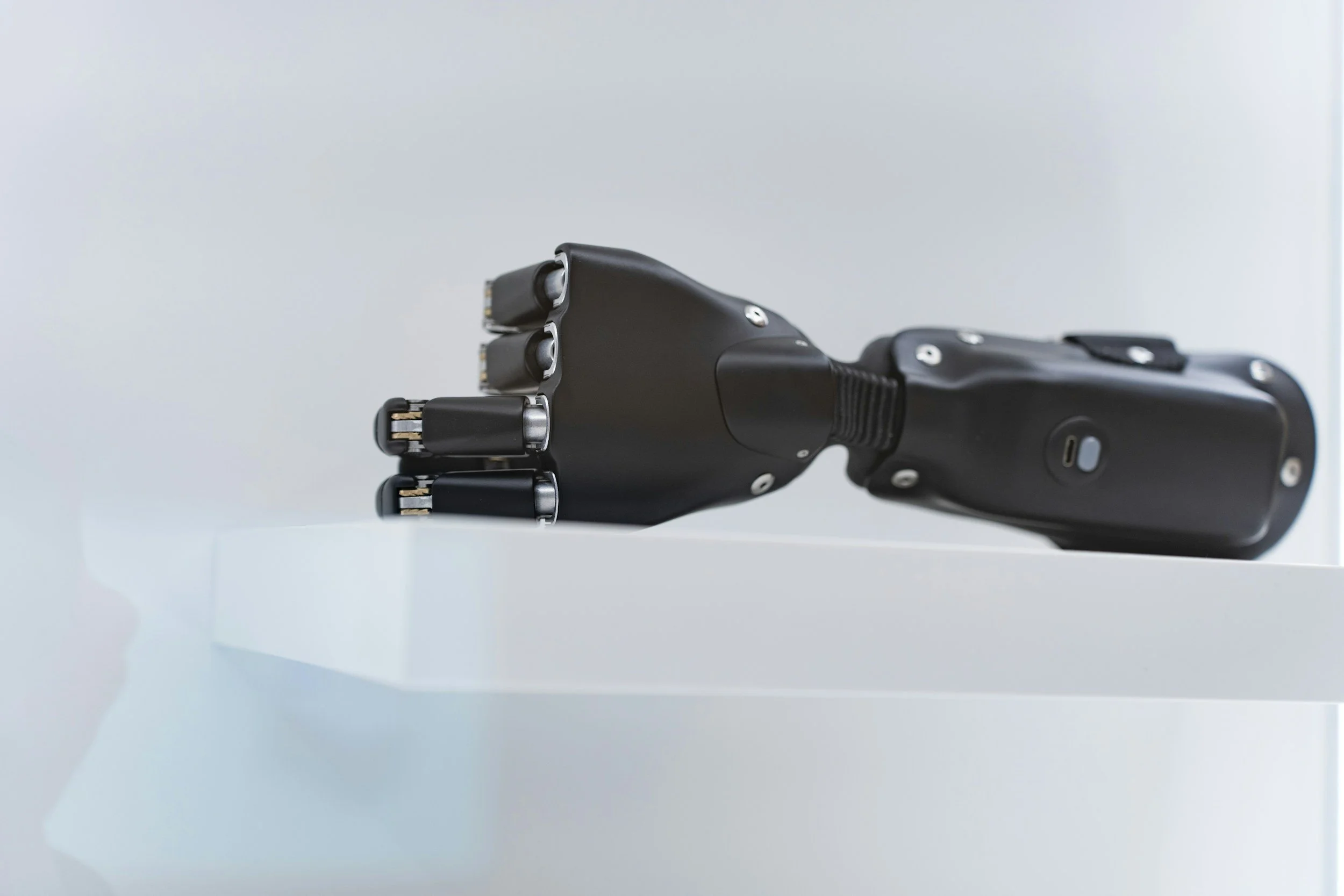
Transfer assistance devices have evolved not only to cart-types like Akane Welfare’s “Ishinodesu II” but to “arm-type” devices directly assisting caregivers’ arms. These, via multi-joint structures, reproduce natural human motions and contribute to caregivers’ low back pain prevention. This chapter introduces initiatives of two companies developing unique products in this field.
3.2 Technotool Co., Ltd. – Self-Support Type Robot Arm “Udero”
Company Profile
Technotool Co., Ltd. (https://ttools.co.jp/) is a small and medium-sized enterprise that developed the electric wheelchair robot arm “Udero (Udero)”. It conducts product development focused on user self-support.
Product Features
“Udero” is a 6-joint robot arm attachable to electric wheelchairs. With a light payload of 1kg, it supports basic daily actions like meal assistance and object retrieval.
It features a design operable by users themselves with a controller, contributing to user dignity and self-reliance enhancement without caregiver assistance. Being attachable/detachable to wheelchairs, it can be removed as needed.
Development Strengths
Flexible field response, characteristic of small and medium-sized enterprises, is the company’s strength. It actively pursues customisation matching individual users’ physical conditions and living environments, responding to diverse needs unaddressed by uniform products.
3.3 Muscle Co., Ltd. – Transfer Assistance Robot “ROBOHELPER SASUKE”
Company Profile
Muscle Co., Ltd. (https://musclecorp.com/) is a venture enterprise known for power assist technologies like “Muscle Suit”. It advances product development specialised in reducing caregivers’ physical burden.
Product Features
“ROBOHELPER SASUKE (Robohelper Sasuke)” is an arm-type transfer assistance robot in a sheet-embracing form. It supports bed-to-wheelchair transfers, with power assist function enabling design for bedridden users.
Caregivers can safely lift and move users simply by operating the main body. Mechanically substituting lifting motions substantially reduces caregivers’ waist burden.
Venture Enterprise Mobility
The company holds mobility to swiftly reflect field needs into products. Feedback from caregiving site trials is rapidly utilised in development, with repeated improvements.
3.4 Importance of Precision Drive Technology
The smooth, safe joint actions these arm-type devices achieve owe much to precision parts like speed reducers generating high torque despite small size.
Robots with multi-joint structures demand high-precision control per joint. Positioning accuracy, responsiveness, quietness, long-term reliability—all depend on drive system parts performance, beginning with speed reducers.
Especially in caregiving robots, with frequent direct human contact or human collaboration, safety and control delicacy exceed industrial robots. Large backlash (gear play) risks lowered positioning accuracy, unnatural movements, or vibrations.
Such precision parts supply systems form the foundation supporting Japan’s caregiving robot industry. Behind finished product makers’ development of user-need-responsive products lies world top-class performance part makers. The next chapter details the technology of Harmonic Drive Systems, a representative example.
Chapter 4: Precision Speed Reducers Supporting Caregiving Robots
4.1 Company Profile
Harmonic Drive Systems Inc. (https://www.hds.co.jp/) has its head office in Shinagawa Ward, Tokyo, and factory in Azumino City, Nagano Prefecture—a precision parts manufacturer. Since establishment in 1970, it specialises in development and manufacture of strain wave gearing speed reducers “Harmonic Drive®”, with consolidated employee count in thousands.
Listed on the Tokyo Stock Exchange Standard Market, adopted widely from industrial robots to medical devices, aerospace, etc.
4.2 What is a Speed Reducer
Speed reducers are vital parts used in robot joints. They decelerate servo motor high-speed rotation to produce large torque (rotational force).
The core part determining robot motion precision, load tolerance, service life—speed reducer performance sways overall robot performance. In caregiving robots too, high-precision, highly reliable speed reducers are demanded to support human bodies or realise delicate motions.
4.3 Technical Superiority of Harmonic Drive®
“Harmonic Drive®” manufactured by Harmonic Drive Systems is a speed reducer with proprietary strain wave gearing mechanism.
Structure and Principle
Composed of merely 3 parts. Wave generator, flexspline, circular spline—these 3 parts utilise metal elasticity to realise deceleration.
Technical Features
Main features are as follows.
Non-backlash: Virtually no gear play, enabling high-precision positioning.
Small/lightweight: Compact mechanism allows mounting in limited spaces. Particularly important for body-mounted caregiving robot types.
High reduction ratio: Achieves high ratios in one stage, with simple structure.
Low vibration/low noise: Smooth motions possible, suitable for caregiving sites.
Manufacture demands strict requirements in material selection, manufacturing equipment, processing steps—this manufacturing difficulty forms entry barriers.
4.4 Share and Achievements in World Market
Harmonic Drive Systems holds world top-class share in industrial robot joint parts. Particularly frequent adoption in small/medium robots (payload 10kg below), occupying high world market share.
Company products have adoption records in Honda biped walking robots and NASA Mars exploration rover arms, with high technology force evaluated.
4.5 Application to Caregiving Robots
In caregiving robot fields too, demand rises for high-precision speed reducers like Harmonic Drive®.
Tendency for high-precision speed reducers used in multi-joint wearable robots or walking training robots. In power suits or rehab support devices, delicate control matching human motions demanded—small/lightweight yet high-precision characteristics suit.
However, caregiving robot types diverse, with appropriate parts selected per use or required performance.
4.6 Japanese Enterprises’ Competitive Superiority
Reason Harmonic Drive Systems maintains high world market share is long years of technology accumulation.
Technology Accumulation
Since 1970 establishment, over 50 years continuing strain wave gearing speed reducer development. Materials science and precision processing technology accumulations support product performance.
Strict Quality Management
Nagano Azumino City factory has integrated production system. Micron-unit precision management conducted, maintaining high quality standards.
Differentiation from Competitors
Korean/Chinese makers also advancing into speed reducer market, enhancing technology power. At present, tendency for Japanese makers higher evaluation in long-term durability/quality, but competition intensifies yearly.
Thus, existence of precision parts makers like Harmonic Drive Systems supports Japan’s caregiving robot industry from the base. Behind superior product development by finished product makers lies supply of such high-quality parts.
Conclusion
Japan’s caregiving assistance technology has strengths generally little known. That is, possessing multi-layered competitiveness from international standards formulation to field-oriented product development and precision parts supply.
First, Japan plays leading role in caregiving robot field international rule-making. The personal care robot international safety standard ISO13482 issued in 2014 was led and formulated by Japan. Many makers advance development referencing this standard, with Japan demonstrating certain leadership in international standards including this.
Second, field-oriented development methods institutionalised. From 2012, Ministry of Economy, Trade and Industry and Ministry of Health, Labour and Welfare designated “priority areas for caregiving utilisation of robot technology”, systematically supporting collaboration between developing enterprises and caregiving sites. Like Akane Welfare’s “Ishinodesu II”, development processes directly hearing field voices via welfare equipment business, repeating trials/feedback for improvement, produce truly easy-to-use products. “Ease of use” unmeasurable by catalogue specs alone is value born from approx. 10 years of site collaboration.
Third, in fields of precision parts supporting caregiving robots, Japanese enterprises hold global competitiveness. Strain wave gearing speed reducers manufactured by Harmonic Drive Systems occupy world top-class share in industrial robot market. Over 50 years technology accumulation, micron-unit precision management, long-term durability consideration form important elements supporting caregiving robot performance.
Amid global ageing progress, care worker shortage is common challenge across countries. China approx. 2035 ageing rate over 20 per cent, South Korea 2025 super-aged society entry, Singapore needs substantial care worker increase by 2030. In such situations, technology and experience cultivated by Japan—reaching super-aged society earliest—holds concrete value.
Particularly noteworthy is Japanese enterprises’ strength not only in finished products but also precision parts swaying their performance. Caregiving robot market predicted continued growth; Japan’s caregiving assistance technology—leading international standards, establishing field-oriented development methods, global competitiveness in precision parts—harbours potential as important business opportunity in global market.
However, technology progress continues, with Korean/Chinese makers also advancing quality improvement. Generally, Japanese-made earned high evaluations in long-term durability/quality, while other country makers also heightening technology power, competition intensifying. For Japanese enterprises to maintain competitiveness, continuing close site collaboration and advancing technology development is demanded. Japan’s caregiving assistance technology multi-layered strengths—that is precisely worthy of the name “hidden capability”.